Family entertainment center development has moved past the procurement model that defined the category for two decades. Operators no longer open a catalog, select climbing structures and ball pits by square footage, and assemble them into a leased unit. The capital intensity of FEC projects — typically running from several hundred thousand to several million dollars depending on footprint and market — has pushed investors and mall developers toward a different question: not "what equipment should we buy," but "what system should we build."
This is the defining shift behind indoor activity systems for FECs in 2026. An indoor activity system is not a collection of attractions. It is an engineered ecosystem of zoning, circulation, safety infrastructure, and revenue logic, designed as a single integrated asset rather than a sum of purchased parts. The distinction matters commercially: system-based projects show materially different yield curves, maintenance cost trajectories, and expansion economics than equipment-based projects, and increasingly, lenders and franchise groups evaluate FEC proposals with that distinction in mind.
This article lays out the architecture, standards, and ROI mechanics behind that shift, for investors and developers evaluating new builds, renovations, or multi-site rollouts.
An indoor activity system is the engineered integration of play structures, interactive technology, circulation design, and safety infrastructure into a single operational unit governed by a coherent design logic — as opposed to an assembly of independently sourced equipment units placed into a floor plan after the fact.
The practical difference shows up at the planning stage. Equipment buying starts with a product list: a trampoline zone, a soft-play structure, an arcade bank, a party room. System design starts with a site analysis — catchment demographics, anticipated dwell time, staffing model, peak-hour throughput — and only then derives the equipment mix that the site requires to hit defined commercial targets.
System thinking treats four layers as interdependent rather than sequential:
A facility designed equipment-first typically optimizes only the mechanical layer, leaving the commercial and safety layers to be reconciled afterward — usually at a cost premium during fit-out or, worse, after opening, in the form of underperforming zones and operational rework.
Modern FEC layouts are segmented by behavioral and developmental category rather than by attraction type. The standard architecture separates:
This segmentation is not cosmetic. Mixed-age zones without clear separation are a recurring source of incident reports in commercial play environments, and they depress dwell time because caregivers disengage from passive supervision to active intervention. Segmentation by age and risk profile is now treated as a baseline design requirement rather than a premium feature, reflected in IAAPA's operational guidance for indoor attractions, which emphasizes age-appropriate zoning as a core risk-management control rather than a layout preference.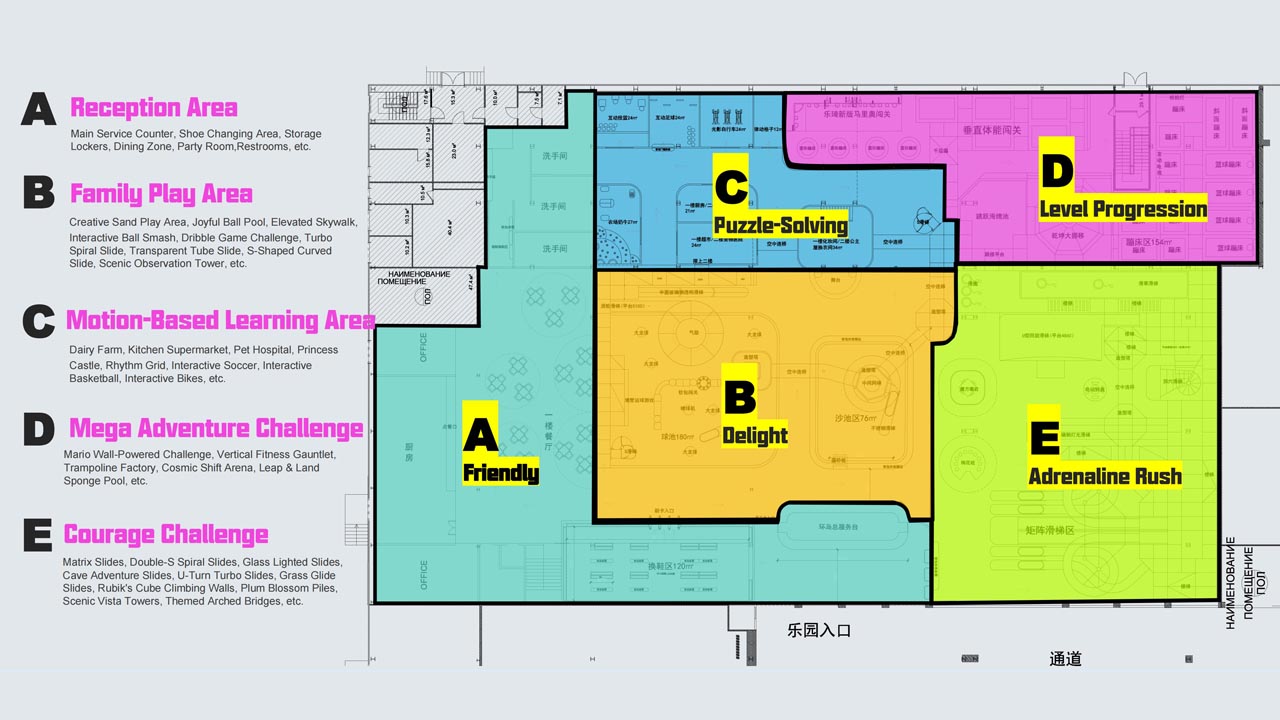
Sensor-based and projection-based interactive systems — interactive walls, motion-triggered floor games, AR climbing walls — have moved from novelty installations to standard system components because they solve a specific architectural problem: they extend usable dwell time in compact footprints where physical structures alone cannot. A 150–200 square meter interactive zone can sustain comparable session lengths to a much larger soft-play structure, which matters directly for sites constrained by mall floor-plate economics.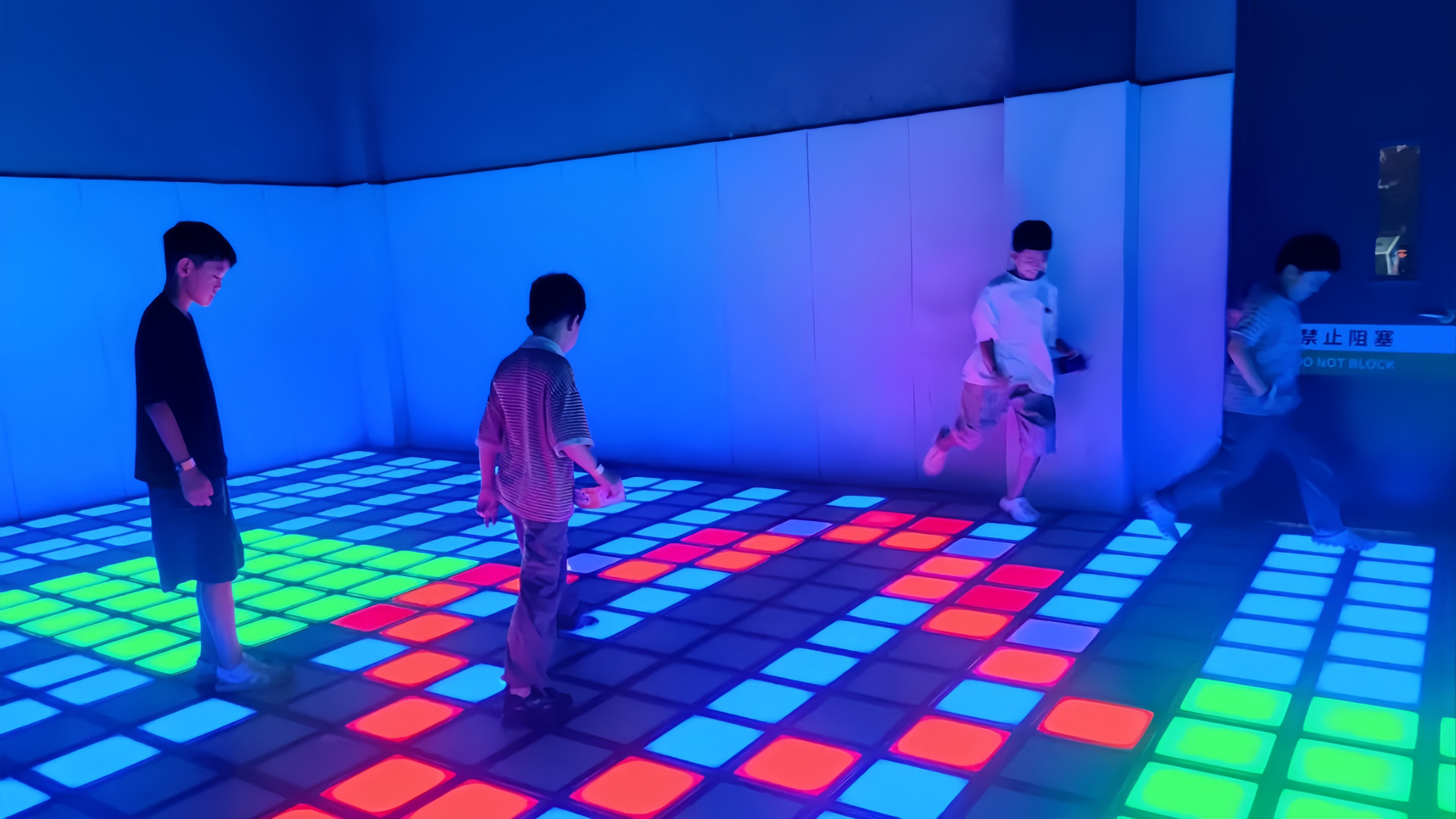
In a system-based design, safety is not a sign-off step at the end of construction — it is a design constraint applied from the first floor-plan iteration: fall-zone radii determine structure spacing, surfacing specification determines slab and subfloor requirements, and means-of-egress calculations determine zone capacity caps before any equipment is finalized.
System designers map the visitor journey before finalizing zone placem ent: entry and queuing, orientation point, primary play engagement, secondary/impulse engagement, and exit-adjacent retail or F&B touchpoints. Each stage is a design variable, not an afterthought.
Dwell time is the central commercial variable in FEC economics because most revenue models — admission tiers, F&B attachment, party packages — scale with time-on-site rather than per-attraction usage. System design deliberately engineers dwell time through structure sequencing (low-intensity to high-intensity progression), rest-point placement (seating and F&B sightlines into active zones), and zone rotation logic that distributes visitors across the floor rather than concentrating them at the entrance.
Conversion zones — redemption counters, party booking desks, F&B counters — are positioned at points of natural circulation friction (zone transitions, exit paths) rather than at arbitrary locations. This is standard practice in shopping-center anchor design more broadly, and TEA/AECOM's annual theme index reporting on attendance and attraction-industry performance has repeatedly noted that integrated, multi-revenue-stream venues outperform single-revenue-stream venues on a per-visitor basis — a finding that applies directly to FEC layout strategy, where party rooms, F&B, and redemption retail are now treated as co-equal revenue zones with the play structures themselves, not as ancillary add-ons.
This is the most consequential decision point in FEC capital planning, and it has direct cost-structure, scalability, and ROI implications.
Modular play systems for FECs are built from standardized structural components — platforms, towers, connecting elements — engineered for reconfiguration. Custom-built systems are engineered as one-off structures specific to a single site and theme.
Cost structure. Modular systems carry lower per-unit engineering cost because structural certification is amortized across many installations of the same component family. Custom builds carry higher upfront engineering and certification cost but allow site-specific footprint optimization that modular components cannot always achieve in irregular floor plates — a frequent constraint in mall-adjacent or repurposed retail sites.
Scalability. Modular systems scale predictably across multi-site rollouts: the same component family can be reconfigured for different footprints without re-engineering from zero, which is the primary reason franchise and multi-location operators default to modular or hybrid systems for expansion. Custom systems do not scale directly — each new site effectively restarts the design-engineering cycle, even if aesthetic language is shared across locations.
ROI implications. Modular systems generally produce faster payback on first installation due to lower engineering overhead, but custom systems can outperform on a per-square-meter revenue basis in flagship or destination locations where differentiated theming materially affects catchment draw and price-point tolerance. The decision is not "better vs. worse" — it is a function of site role: a flagship destination project justifies custom-built differentiation; a multi-site rollout justifies modular standardization.
Expansion strategy. Operators increasingly run a hybrid model: a custom-built signature zone (a themed environment or anchor attraction) combined with modular zones for toddler, teen, and interactive areas. This contains engineering cost to the differentiating element while keeping the bulk of the structure scalable.
No system-based FEC design is commercially viable without compliance architecture built in from the structural level, not retrofitted at inspection.
Third-party laboratory certification — testing bodies such as SGS, TÜV, and equivalent accredited labs operating under ISO/IEC 17025 — is the mechanism by which these standards are verified independent of the manufacturer's own claims, and is now a standard procurement requirement for institutional investors and mall landlords rather than an optional differentiator.
Operators evaluating suppliers should request structural test reports and certification scope directly, not summary compliance statements. A detailed reference for evaluating structural documentation and pre-installation requirements is available in our commercial indoor playground equipment installation guide.
The ROI case for system-based design over equipment-based procurement rests on three measurable operational factors.
Operational efficiency. Integrated systems are designed around a single staffing and supervision model rather than zone-by-zone improvisation, which reduces labor allocation inefficiency — a meaningful cost line given that staffing is typically the largest controllable OPEX category in FEC operations after rent.
Maintenance cost reduction. Systems engineered with component standardization and accessible structural points reduce mean-time-to-repair and parts lead time. Equipment assembled piecemeal from multiple suppliers, by contrast, often carries fragmented warranty terms and inconsistent parts availability, which compounds downtime cost over a multi-year operating horizon.
Capacity optimization. System-designed zoning calculates maximum safe occupancy per zone as a function of structure design, not as a generic floor-area ratio — which allows operators to set accurate capacity caps that protect both safety compliance and peak-period revenue capture, rather than under- or over-estimating throughput.
These three factors compound over a typical 7–10 year operating horizon for a leased FEC unit, and they are the primary reason that institutional investors evaluating FEC proposals increasingly request system-level design documentation — zoning rationale, capacity modeling, maintenance specification — rather than equipment lists, during due diligence.
The supplier landscape has restructured around this shift. Manufacturers that historically competed on unit pricing for individual structures are repositioning as design-build providers offering turnkey FEC solutions — site analysis, layout design, structural engineering, certification management, and installation under a single contract scope, rather than equipment delivery alone.
This consolidation mirrors a broader pattern in the built-environment sector, where specialty fabricators evolve into systems integrators as client procurement sophistication increases. Luckyplay has been in this field since 2008 and has completed more than 3,000 projects worldwide — including original themed environments such as the Glimmering Secret Realm and Weird Soundwave Paradise — has developed its commercial practice around this design-build model: treating FEC layout design strategy, structural certification, and revenue-zone planning as a single deliverable rather than a sequence of separate vendor relationships. The relevant comparison point for developers is not which supplier offers the lowest per-unit equipment cost, but which provider can document a coherent system design process from site analysis through certification.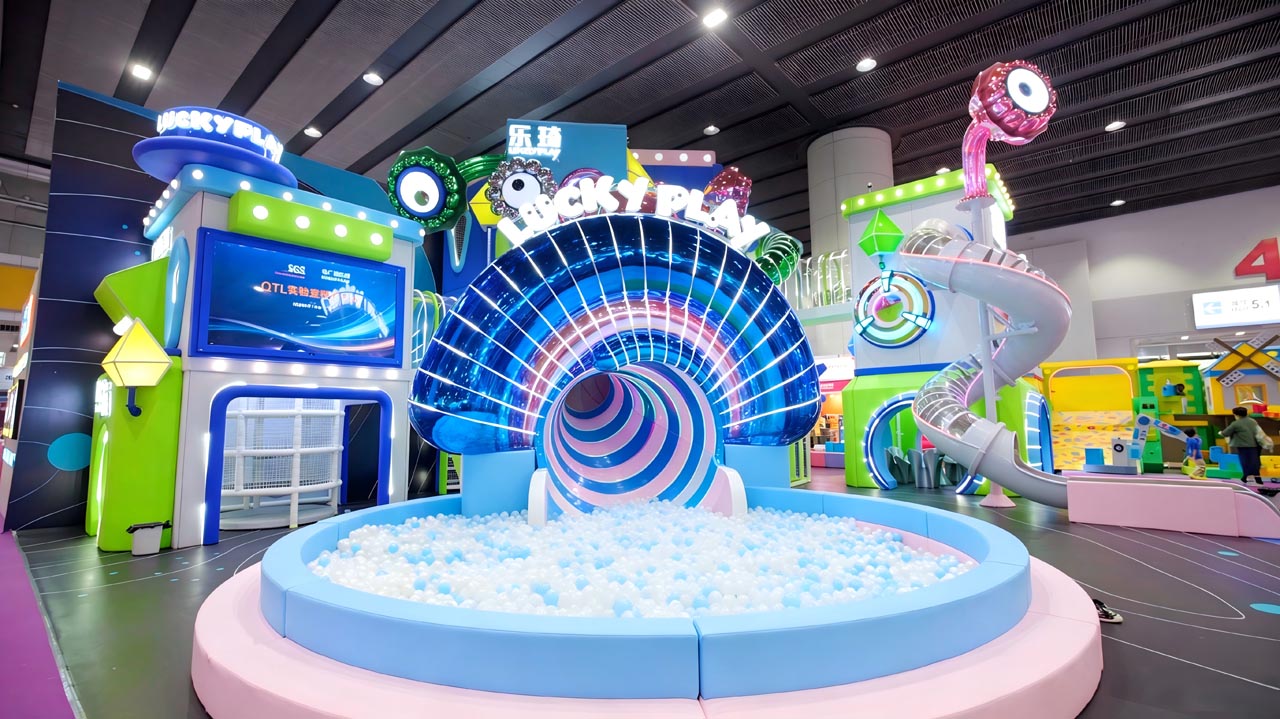
The shift toward indoor activity systems for FECs reflects a maturing capital discipline in an industry that, for most of its history, was equipment-driven by default. Site analysis, zoning logic, dwell-time engineering, and compliance architecture are no longer downstream considerations resolved during fit-out — they are the design inputs that determine whether a project meets its return targets.
For investors and developers evaluating new FEC projects in 2026, the operative question during supplier selection should not be which attractions to buy, but which provider can demonstrate system-level design competence: documented zoning rationale, modular vs. custom cost modeling appropriate to the site's commercial role, and certification compliance under ASTM F1918 or EN 1176/1177 as applicable to the target market. That distinction — system design versus equipment procurement — is what increasingly separates FEC projects that meet their pro forma from those that require costly redesign within the first operating year.


