Installation in a Children's Play Area: A Step-by-Step Guide From Design to Opening
Installation in a children's play area is an engineering process, not a one-day assembly job. For investors and operators entering the family entertainment center (FEC) sector, the gap between a signed contract and an opening-day ribbon cutting is filled with structural surveys, layout approvals, mechanical assembly, surface work, and compliance inspection. Each phase carries its own technical requirements, and skipping or compressing any of them increases the risk of rework, delayed openings, or non-compliant equipment.
This guide walks through the full installation lifecycle for a commercial indoor playground, trampoline park, or hybrid soft-play venue — from the first technical survey to the final safety sign-off. It is written for developers, mall operators, and franchise investors who need to understand what a turnkey FEC installation process actually involves, so they can evaluate contractors, set realistic timelines, and ask the right questions before construction begins.
Site Measurement and Technical Survey
Before any structure is fabricated, the installation team conducts an on-site technical survey of the proposed venue. This step exists because architectural drawings rarely capture every real-world constraint of a retail unit, mall void, or standalone building.
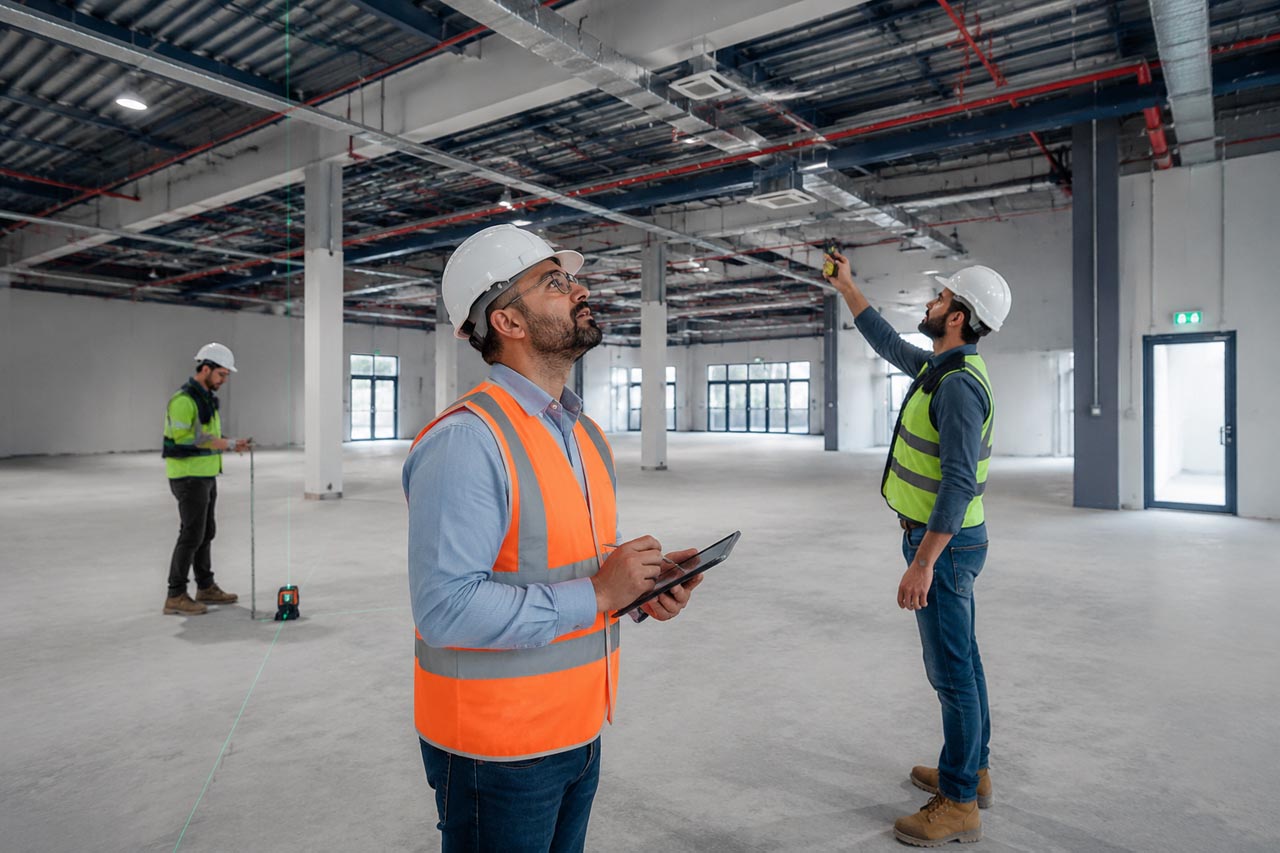
Key elements of the survey include:
- On-site measurement of floor area, ceiling height, column placement, and irregular boundaries
- Structural limitations assessment — confirming whether the existing floor slab, mezzanine, or roof structure can bear the additional point loads and distributed loads of steel play structures, trampoline frames, or soft play towers
- Load-bearing and spatial planning considerations, including verifying floor slab capacity ratings against the equipment's load specifications, and identifying where structural reinforcement may be required before installation begins
- Utility and layout constraints evaluation — locating sprinkler heads, HVAC ducting, electrical conduits, fire exits, and emergency egress paths that will constrain where equipment can be placed
The survey output becomes the baseline reference for every subsequent design and engineering decision. Any commercial playground installation workflow that skips this step risks discovering structural conflicts after fabrication has already started.
3D Layout Design Confirmation
Once survey data is collected, the concept design is translated into a confirmed spatial layout. This is the bridge between the client's initial vision and what is structurally and operationally buildable inside the surveyed space.
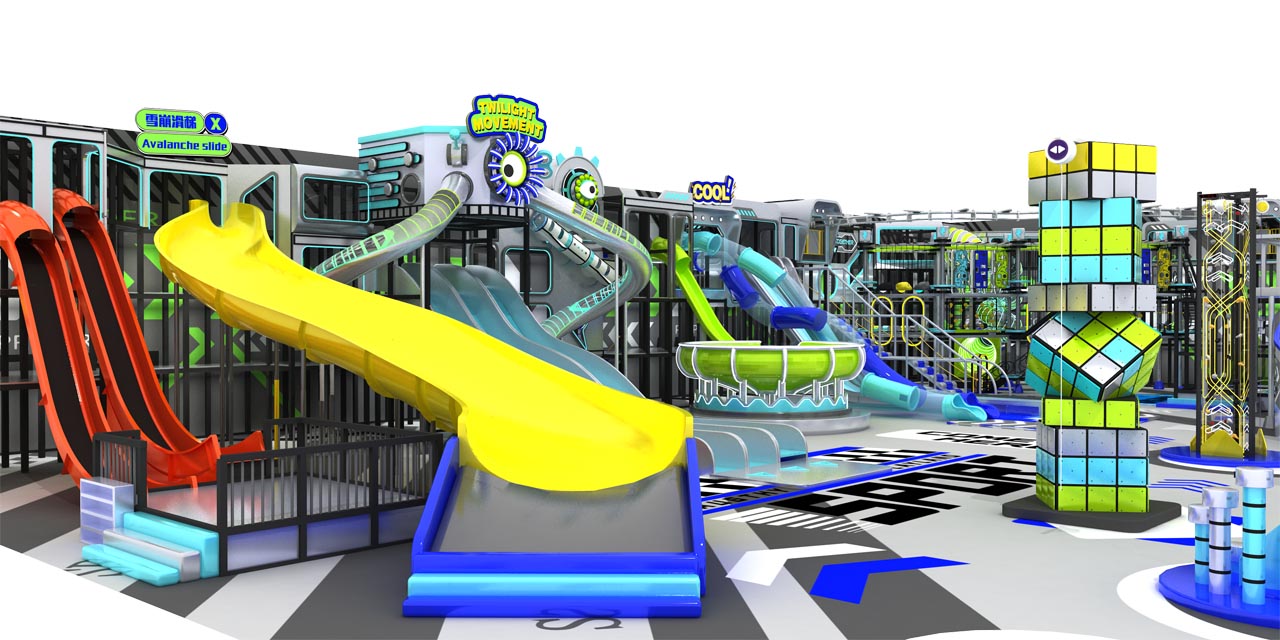
This phase typically covers:
- Translation from concept to spatial layout, mapping themed zones, play structures, and circulation paths onto the actual surveyed dimensions
- Safety circulation design logic — sizing aisles, entry/exit points, and sightlines so staff supervision and emergency evacuation are not obstructed by equipment placement
- Capacity planning and zoning strategy, calculating maximum concurrent user counts per zone based on equipment type, throughput expectations, and applicable safety clearances
- A client approval workflow for final drawings, typically involving multiple revision rounds between mechanical drawings, rendered 3D layouts, and the operator's commercial requirements before signing off on a buildable plan
Only after this layout is formally approved does the structural installation process begin. This sequencing matters: changes requested after fabrication starts are significantly more expensive and time-consuming than changes made at the drawing stage.
Structural Installation Process
This is the core construction phase of installation in a children's play area, where steel, soft play modules, and trampoline systems are physically assembled on site.
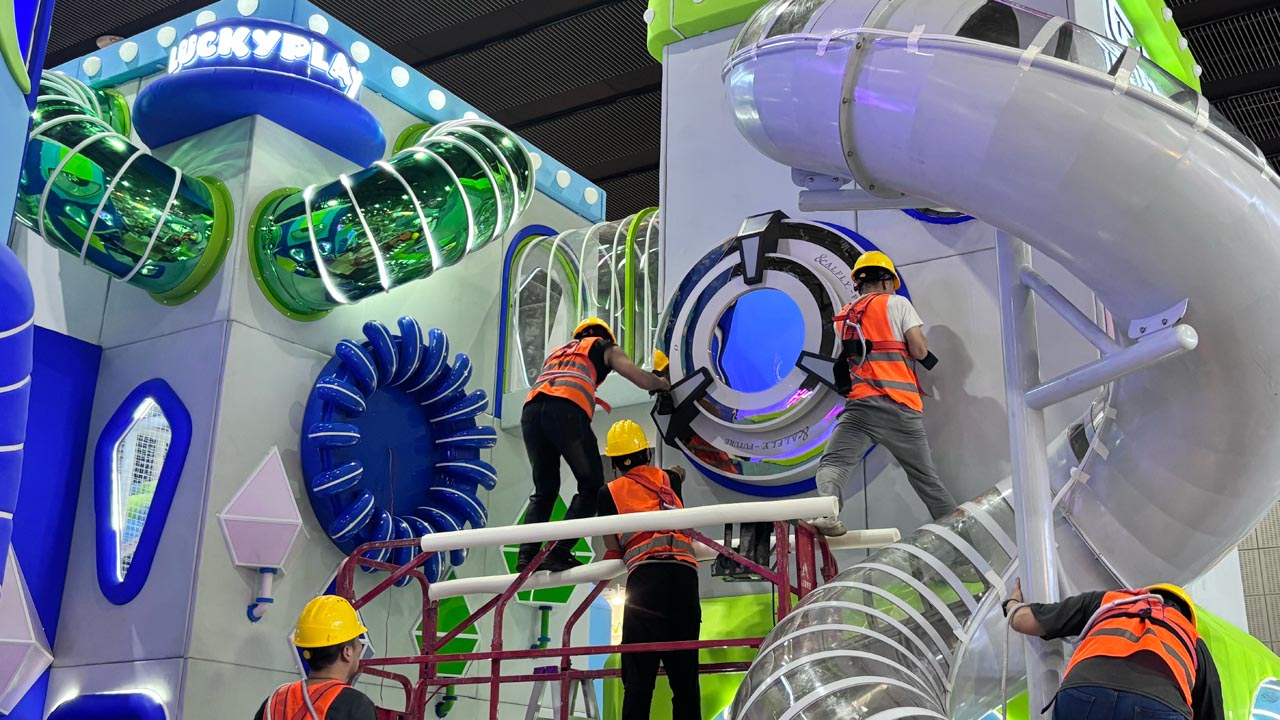
A typical FEC installation process includes:
- Steel structure fabrication and assembly, where primary frames are pre-fabricated off-site to engineering specifications, then assembled, leveled, and bolted on site following the approved structural drawings
- Modular playground installation system assembly — soft play towers, slides, ball pits, and connecting platforms are installed as interlocking modules, allowing phased assembly and future reconfiguration
- Trampoline system installation and anchoring, following manufacturer specifications for frame spacing, spring tension, padding placement, and anchoring to the building structure or a dedicated sub-frame
- Mechanical safety checks during installation, including torque verification on structural bolts, weld inspection where applicable, and stability testing of vertical structures before padding and surfacing are added
- Equipment alignment and tolerance control, ensuring platform gaps, guardrail heights, and connection points stay within the tolerances specified in the engineering drawings, since misalignment at this stage can create fall hazards or pinch points later
This phase is also where on-site engineers cross-check the as-built structure against the original 3D layout to confirm no deviations have crept in during assembly.
Surface Works and Base Preparation
Surface and base preparation works run in parallel with, or immediately following, structural installation, and are central to a venue's eventual safety compliance.
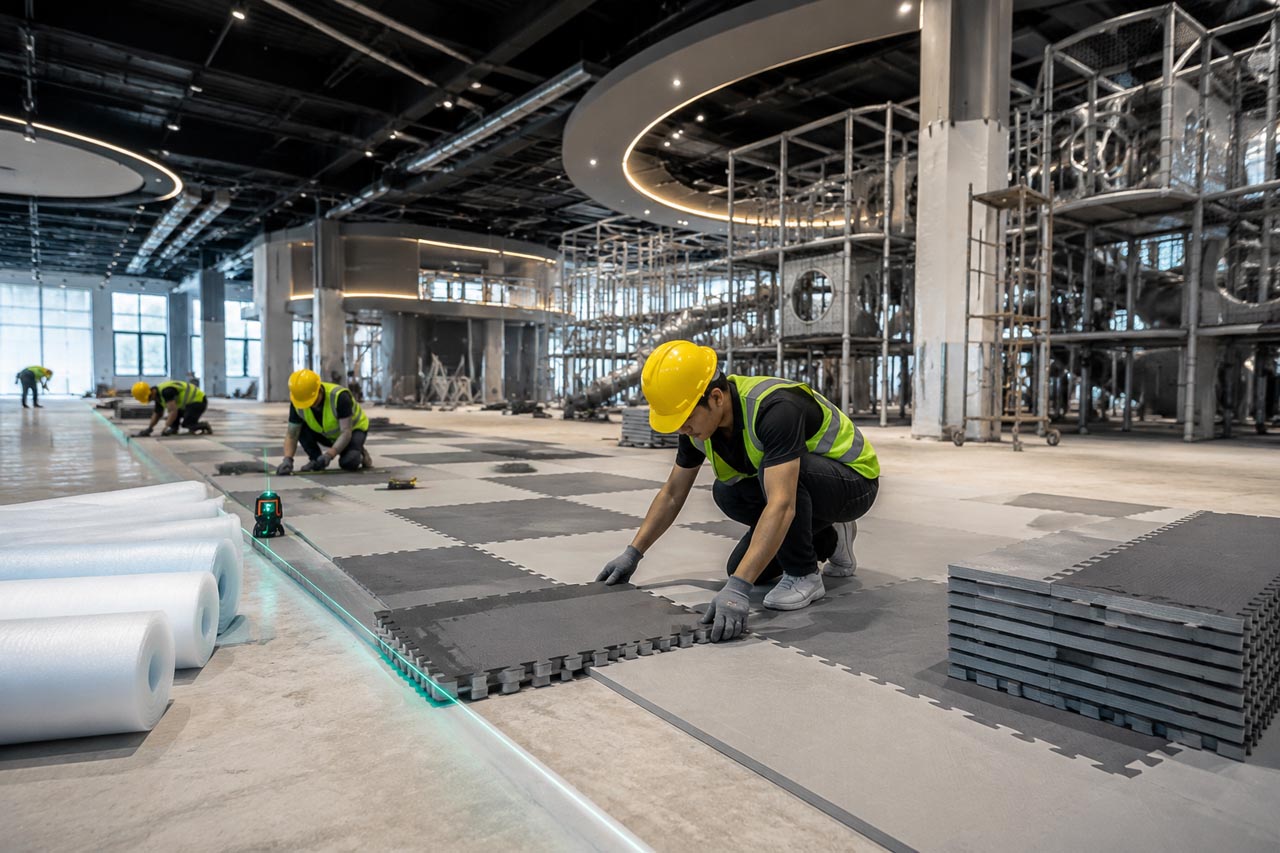
Core elements include:
- Flooring system installation, typically EPE (expanded polyethylene) or EVA (ethylene-vinyl acetate) impact-protection flooring, selected and sized according to the fall height of adjacent play structures
- Wall padding and soft protection systems installed around structural columns, low ceilings, and any rigid surfaces within a child's reach or fall path
- Ground leveling and safety base preparation, correcting floor irregularities before flooring is laid, since uneven bases compromise both impact attenuation performance and long-term flooring durability
These surfacing decisions are not cosmetic. They are directly tied to fall-height and impact-attenuation requirements addressed in the safety inspection phase below.
Interactive and Themed Installation
For venues that include themed environments or interactive technology, this phase layers design and electronics on top of the completed structural shell.
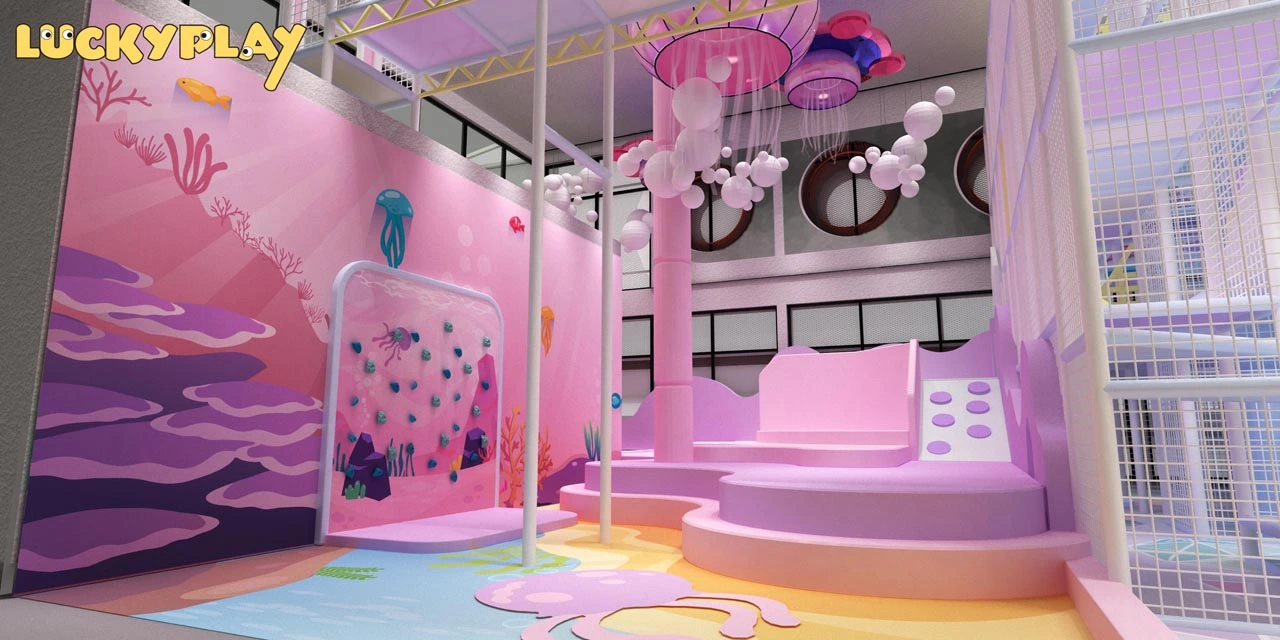
Typical scope includes:
- IP-themed decorative installation, including sculpted elements, murals, or branded environment pieces coordinated with electrical and structural teams to avoid conflicts with load-bearing elements
- Interactive digital play systems integration, such as projection-based games, sensor floors, or touchscreen elements, which require coordinated cabling, power runs, and ventilation planning during — not after — structural buildout
- Lighting and sensory elements installation coordination, balancing ambient lighting for atmosphere against the practical lighting levels required for staff supervision and emergency visibility
Companies operating as turnkey FEC solution providers — Luckyplay being one example within the industry — typically manage this phase alongside structural installation so that themed and interactive elements are integrated into the build sequence rather than retrofitted afterward.
Safety Inspection and Compliance for Installation in a Children's Play Area
Safety inspection is the gating step before any commercial play venue can open to the public. Installation in a children's play area is only complete once the as-built structure has been verified against recognized safety standards — not simply once construction work has finished.
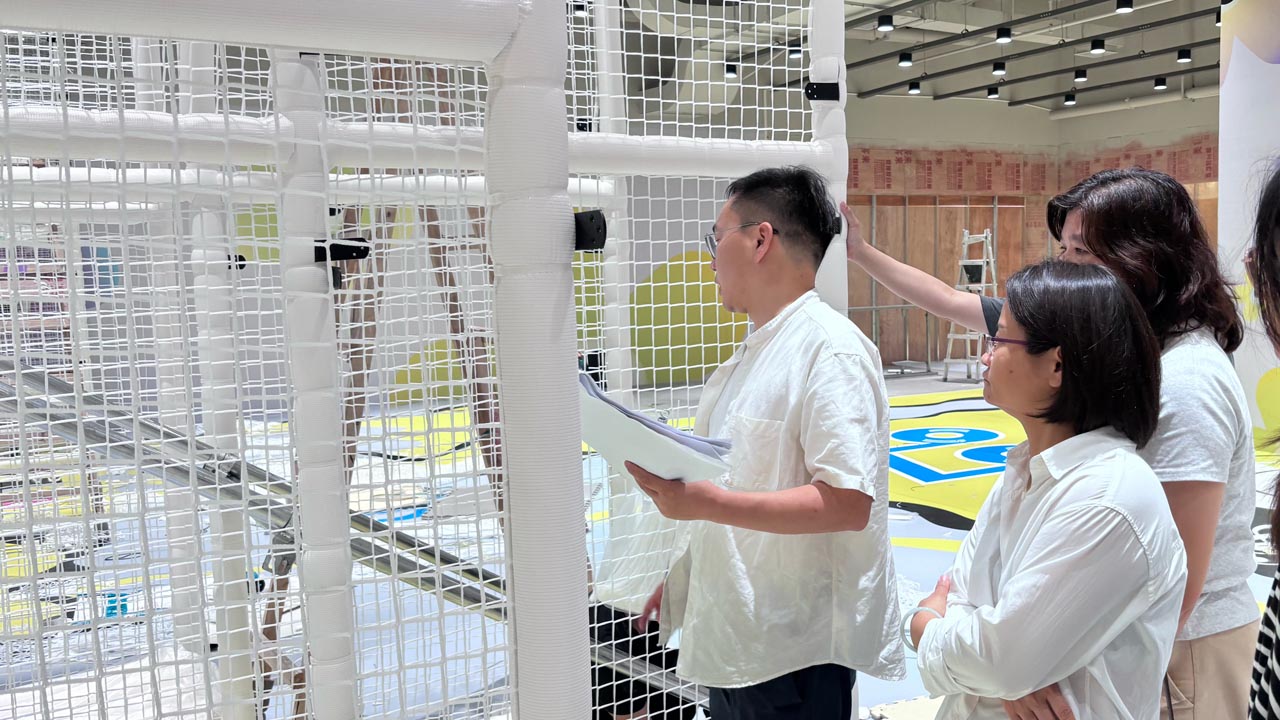
Relevant standards referenced during this phase include:
- ASTM F1918, the standard covering safety performance specifications for soft-contained play equipment
- EN 1176, the European series of playground safety standards covering general construction requirements, including impact attenuation and structural integrity
- The CPSC Public Playground Safety Handbook, published by the U.S. Consumer Product Safety Commission, which outlines layout, equipment, and surfacing guidance for public playground safety
Inspection checkpoints commonly include:
- Structural stability testing, confirming that assembled frames, towers, and anchored equipment can withstand specified static and dynamic load conditions without excessive deflection
- Fall height safety compliance, verifying that platform heights correspond to the impact-attenuation properties of the installed flooring system beneath and around them
- Impact attenuation zone verification, confirming that protective surfacing extends to the required use-zone boundaries around each piece of equipment
- Fire resistance and material compliance, checking that soft play materials, padding, and themed decorative elements meet applicable flammability standards for indoor commercial occupancy
- Edge protection and safety clearance validation, inspecting guardrails, padding on rigid edges, and minimum clearances between adjacent structures to prevent entrapment or collision hazards
Only after these checkpoints are documented and signed off should a venue proceed to soft opening. Operators are encouraged to retain inspection documentation, as it typically forms part of the venue's ongoing indoor playground maintenance guide and insurance compliance records.
Conclusion
Installation in a children's play area succeeds or fails based on sequencing and documentation: an accurate technical survey, an approved 3D layout, disciplined structural assembly, correctly specified surfacing, and a documented safety inspection against standards such as ASTM F1918, EN 1176, and the CPSC Public Playground Safety Handbook. Investors evaluating a turnkey indoor playground installation partner — whether for a standalone FEC, trampoline park, or hybrid venue — should expect a contractor to walk through each of these phases explicitly, with engineering documentation at every handoff, rather than treating installation as a single undifferentiated construction task. For operators sourcing commercial indoor playground equipment, this phase-by-phase discipline is what separates a compliant, durable installation from one that requires costly rework after opening.
Project Consultation
Organizations evaluating an FEC, trampoline park, or hybrid play venue project are welcome to:
- Request a full project quotation — submit site dimensions and concept requirements for a structural and cost assessment.
- Book an engineering consultation call — discuss site survey findings, structural feasibility, and project timeline with a technical planning team before committing to a design.


