The global family entertainment center industry is expanding. According to the International Association of Amusement Parks and Attractions (IAAPA), location-based entertainment consistently ranks among the highest-growth segments within leisure and hospitality. Market research firms including Grand View Research and MarketsandMarkets estimate the FEC sector at several billion dollars in annual revenue, with compound annual growth rates projected in the high single digits through the latter half of this decade.
And yet, conversations with operators, mall leasing teams, and regional entertainment investors reveal a pattern that industry reports tend to understate: a significant share of new FEC projects—particularly those opening in secondary markets, retrofitted retail spaces, or undercapitalized conditions—fail to reach operational stability within their first twelve to eighteen months.
The reasons are rarely a single catastrophic mistake. More commonly, failure is the compounded result of several interconnected miscalculations: a location chosen for price rather than catchment quality, a design brief driven by equipment cost rather than experiential logic, an operational team without sufficient systems, and financial projections built on optimistic assumptions that real-world foot traffic quickly contradicts.
|
This article is written for decision-makers: investors evaluating FEC as an asset class, retail developers considering entertainment anchors, and operators planning their first or second location. Its purpose is diagnostic, not promotional. The goal is to articulate clearly what separates FEC projects that stabilize and scale from those that close before their first lease renewal. |
Location is the single most consequential decision in FEC development, and it is consistently misjudged. The failure pattern is predictable: a space becomes available at an attractive lease rate, the size seems sufficient, and the landlord is motivated. An operator or investor signs a lease before conducting any meaningful trade-area analysis.
What matters in FEC site selection is not floor area or lease economics in isolation—it is catchment population quality, dwell-time environment, competition density, and anchor co-tenancy. A 3,000-square-meter FEC in a mall whose primary footfall is adult workers on lunch breaks will underperform a 1,500-square-meter venue in a suburban family-oriented retail park, even if the former is twice the size and half the rent.
FECs require a specific demographic concentration: households with children between approximately two and fourteen years of age, with sufficient disposable income and leisure time to make repeat visits. IAAPA's research on attendance drivers consistently identifies proximity, awareness, and perceived value as the top three motivators for family leisure decisions. When the catchment within a reasonable drive-time radius lacks sufficient family density, no amount of marketing or pricing adjustment compensates.
Secondary and tertiary city locations present a particular risk. Operators are sometimes drawn to these markets by lower land costs and less direct competition. What they underestimate is that family leisure spending in these markets is more infrequent, more price-sensitive, and more dependent on social occasion—meaning that a venue needs to be exceptional enough to justify a longer trip. An average FEC in a secondary market is not competing against other FECs; it is competing against the family's decision to stay home.
A significant share of FECs open within shopping malls, often positioned as anchor tenants or footfall drivers. This creates a structural tension that many operators fail to anticipate. Mall management teams want the FEC to generate spillover traffic for adjacent retailers. FEC operators need a certain critical mass of visitors arriving specifically for the entertainment experience—not as a spontaneous add-on to a shopping trip.
These objectives are compatible, but only when the FEC is correctly positioned within the mall (ideally at the end of a traffic corridor, with wayfinding that draws visitors through retail zones), properly sized for the trade area, and designed to justify a dedicated visit. When FECs are placed in residual or under-trafficked mall zones to minimize lease cost, both objectives fail simultaneously.
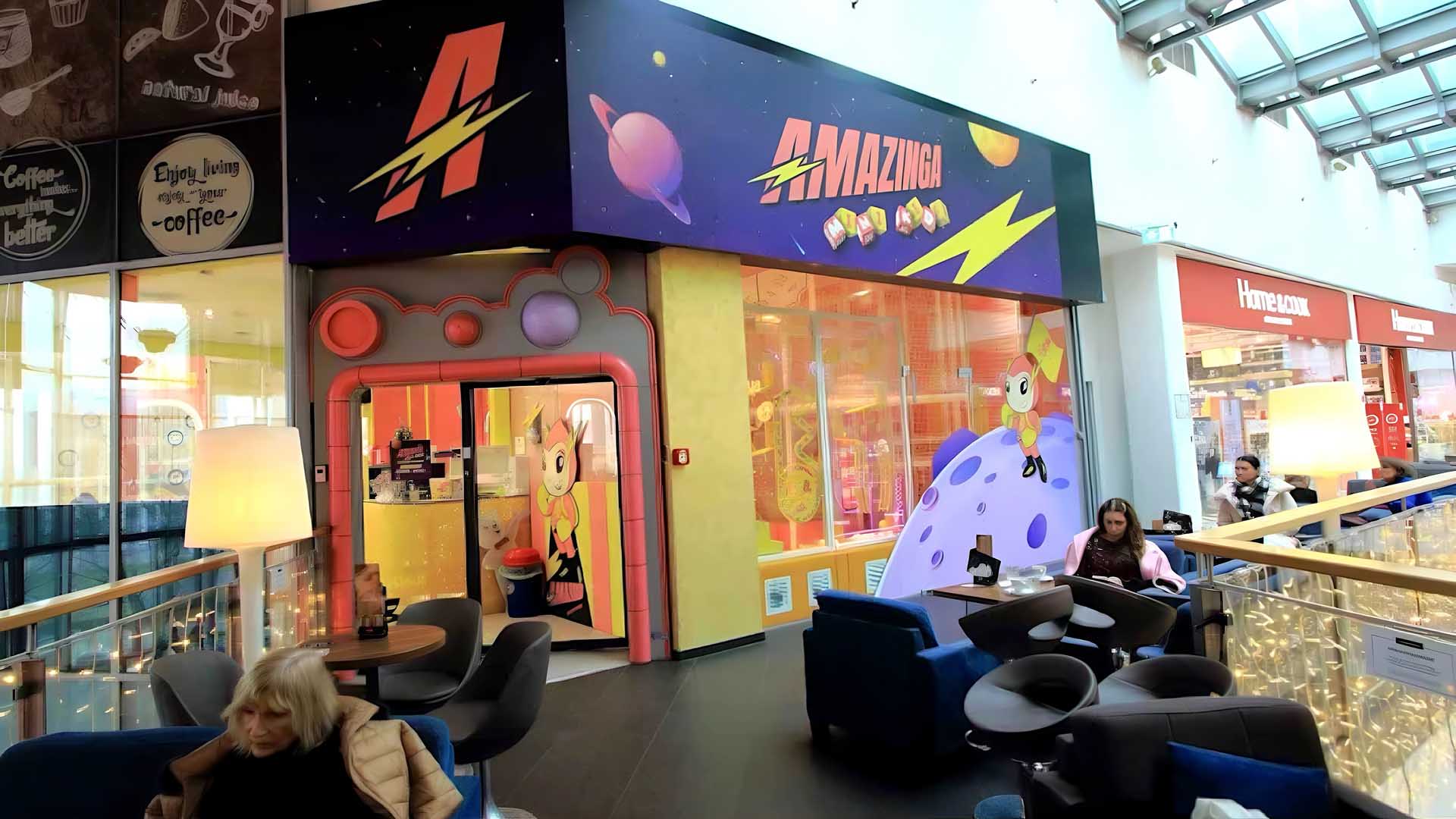
The second most common cause of first-year failure is experience design that fails to hold attention, drive repeat visits, or differentiate the venue from lower-cost alternatives—including the child's bedroom and the local park.
Indoor playground and FEC design is frequently treated as an equipment procurement exercise: select structures, fill square footage, open doors. This approach consistently underdelivers. What guests actually purchase is an emotional experience: the feeling of discovery, the satisfaction of physical challenge, the comfort of a safe and visually engaging environment. Equipment is the medium; experience architecture is the product.
Many FEC layouts are designed for throughput—moving guests through attractions as efficiently as possible—when the business model actually requires dwell time. A family that spends ninety minutes at a venue generates more per-visit revenue than one that completes all activities in forty-five minutes and leaves. The difference lies in layout sequencing, rest zone placement, food and beverage integration, and the creation of what designers call 'magnetic moments'—points of unexpected delight that cause guests to slow down, extend their time, and call others over.
Venues that invest in narrative environment design—thematic zones with visual storytelling, interactive elements that respond to guest behavior, progression structures that reward exploration—consistently report higher dwell time and stronger repeat visit rates than comparably sized venues with generic equipment arrangements.
A common design error is attempting to serve too wide an age range with insufficient zone differentiation. A toddler play structure placed adjacent to a trampoline court creates a safety management problem and a perception problem: parents of young children feel the venue is oriented toward older kids, while tweens and teenagers perceive the space as juvenile. Effective FEC design creates distinct, clearly bounded zones for different age cohorts, each with its own visual identity, programming logic, and staff supervision model.

An FEC can have an excellent location, a strong design concept, and still fail operationally within the first year. Operational failure in FECs tends to manifest in three interconnected areas: staff performance, safety management, and guest experience consistency.
FECs are labor-intensive businesses. They require staff who can simultaneously enforce safety protocols, deliver warm guest experiences, manage conflict (lost children, equipment disputes, parent complaints), and maintain venue cleanliness in real time. Training for this role is complex and attrition is high. Many operators underestimate staffing costs at the pro forma stage, then experience quality collapse when they attempt to reduce headcount to manage margins.
The relationship between staff quality and repeat visit rate is not anecdotal—it is direct. A guest who has a negative staff interaction during a first visit does not return. An operator who has not invested in service training, scripted guest interaction protocols, and clear escalation procedures will see this reflected in reviews, word-of-mouth, and declining second-visit conversion within months of opening.
Safety management is both an ethical imperative and a commercial risk. FEC operators in international markets are expected to comply with applicable standards including ASTM F1918 (Standard Safety Performance Specification for Soft Contained Play Equipment), EN 1176 (European playground equipment standard), and—where applicable—CPSIA requirements for materials used in play structures.
Beyond initial equipment certification, ongoing compliance requires documented inspection protocols, staff training records, incident reporting systems, and equipment maintenance logs. Venues that lack these systems face not only regulatory risk but also insurance exposure. A single incident involving an unlogged maintenance failure can generate liability costs that exceed months of operating revenue. Operators sourcing equipment should verify certifications including SGS QTL, TÜV, CE, and ISO 9001 as baseline due diligence.

Financial miscalculation is a structural contributor to FEC failure. The pattern is consistent: initial investment estimates are based on equipment costs alone, operational costs are underestimated, and revenue projections rely on optimistic attendance assumptions that discount the reality of the ramp-up period.
The visible CAPEX in an FEC project—equipment, flooring, signage—is typically 40–60% of total project cost. The remainder is absorbed by construction and fit-out (structural modifications, electrical upgrades, HVAC for high-occupancy venues), technology (POS systems, wristband or RFID access systems, safety camera infrastructure), pre-opening marketing, staff recruitment and training, and initial working capital.
Operators who plan for equipment costs but not for total fit-out costs routinely arrive at opening with insufficient working capital. The first three to six months of operation for any new FEC are financially demanding: revenue is below stabilized run rate, the venue is absorbing operational learnings, and marketing spend is necessarily elevated. Operators without adequate runway do not survive this period.
|
Cost Category |
Typical % of Total CAPEX |
Common Mistake |
|
Play equipment & structures |
35–45% |
Treated as the only CAPEX line |
|
Fit-out, construction & electrical |
20–30% |
Underestimated in early-stage budgets |
|
Technology & systems |
5–10% |
Often omitted from initial pro forma |
|
Pre-opening marketing & staff training |
5–8% |
Excluded from CAPEX, overlooked in OPEX |
|
Working capital (6-month runway) |
10–15% |
Insufficient runway causes early closure |
Source: Luckyplay project analysis; IAAPA FEC industry benchmarks.
FEC operating costs are dominated by three categories: labor (typically 30–40% of revenue at stabilized operations), occupancy (lease, utilities, and common area maintenance charges—often 20–30% in mall environments), and maintenance. The latter is chronically underbudgeted. Play equipment in a commercial setting sustains meaningful wear: foam padding degrades, net panels require replacement, soft-contained structures need regular inspection and periodic refurbishment. Operators who do not budget for ongoing maintenance face a quality deterioration cycle that drives guest dissatisfaction and accelerates revenue decline.
The FEC market in most developed urban and suburban markets is not undersupplied. In many secondary cities, the arrival of the first FEC stimulates demand that quickly attracts competitive entry. Operators who open without a defensible differentiation strategy find themselves competing primarily on price within twelve to eighteen months—a race that benefits no one.
Differentiation in FEC is not achieved by adding more equipment. It is achieved through a combination of thematic identity (a venue concept clear and distinctive enough to be described in one sentence), programming depth (events, seasonal activations, membership structures that give guests reasons to return), and operational consistency (a service standard that reliably exceeds expectations).
Operators who attempt to compete as a 'bigger version' of an existing concept tend to underperform. Those who invest in original IP, collaborative licensing, or bespoke environment design—even at a smaller footprint—consistently achieve stronger customer loyalty and higher net promoter scores.
A frequently underestimated risk in FEC development is the quality of the supply chain. The decision to select a manufacturer or equipment supplier is often made primarily on price, with insufficient evaluation of design capability, certification standards, delivery reliability, and post-installation support.
Poor supplier execution manifests in several ways during the critical pre-opening and early-operation period: equipment delivered with specification deviations that require on-site modification, installation teams that lack the local knowledge to solve unexpected fit-out challenges, documentation gaps that create certification delays, and warranty disputes that leave operators managing equipment failures without adequate support.
The supplier selection decision should be evaluated as a project partnership, not a commodity procurement. Key due diligence criteria include manufacturing certifications (SGS QTL, ISO 9001, EN 1176), reference projects verifiable by direct contact with previous clients, design capability (2D layouts, 3D concept rendering, theming execution), and a clearly documented post-installation support protocol.
|
A well-designed turnkey approach—integrating concept development, space planning, equipment design, installation, and operational preparation into a single managed process—significantly reduces execution risk during the critical pre-opening phase. Fragmented procurement, where operators source equipment from one party, installation from another, and theming from a third, creates coordination gaps that consistently delay openings and inflate total project cost.
|
Investor models for mall-based FECs routinely incorporate a conversion rate assumption: what percentage of mall visitors will enter the FEC? The typical assumption range is 3–8%, depending on location, concept, and day-type. What is less commonly modeled is the distinction between total mall footfall and qualified footfall—the subset of visitors who include parents with children of target age.
In a general shopping mall, the proportion of visitors who match the FEC's target demographic profile (families with children ages 2–14) is typically 15–30% of total footfall, depending on the mall's catchment profile and tenant mix. The conversion rate must be applied against qualified footfall, not total footfall. Operators who apply conversion assumptions to total visitor numbers build projections that are structurally optimistic by a factor of three to five.
Additionally, conversion rates are not static. They are heavily influenced by visibility (can the FEC be seen and understood from the mall's main traffic corridors?), pricing clarity (are entry prices communicated at the threshold before commitment is required?), and queue perception (does the entrance appear crowded or inaccessible?). Venues that optimize these variables—clear sight lines to attractions, transparent pricing displays, well-managed entry queues—consistently achieve higher conversion than those that do not.
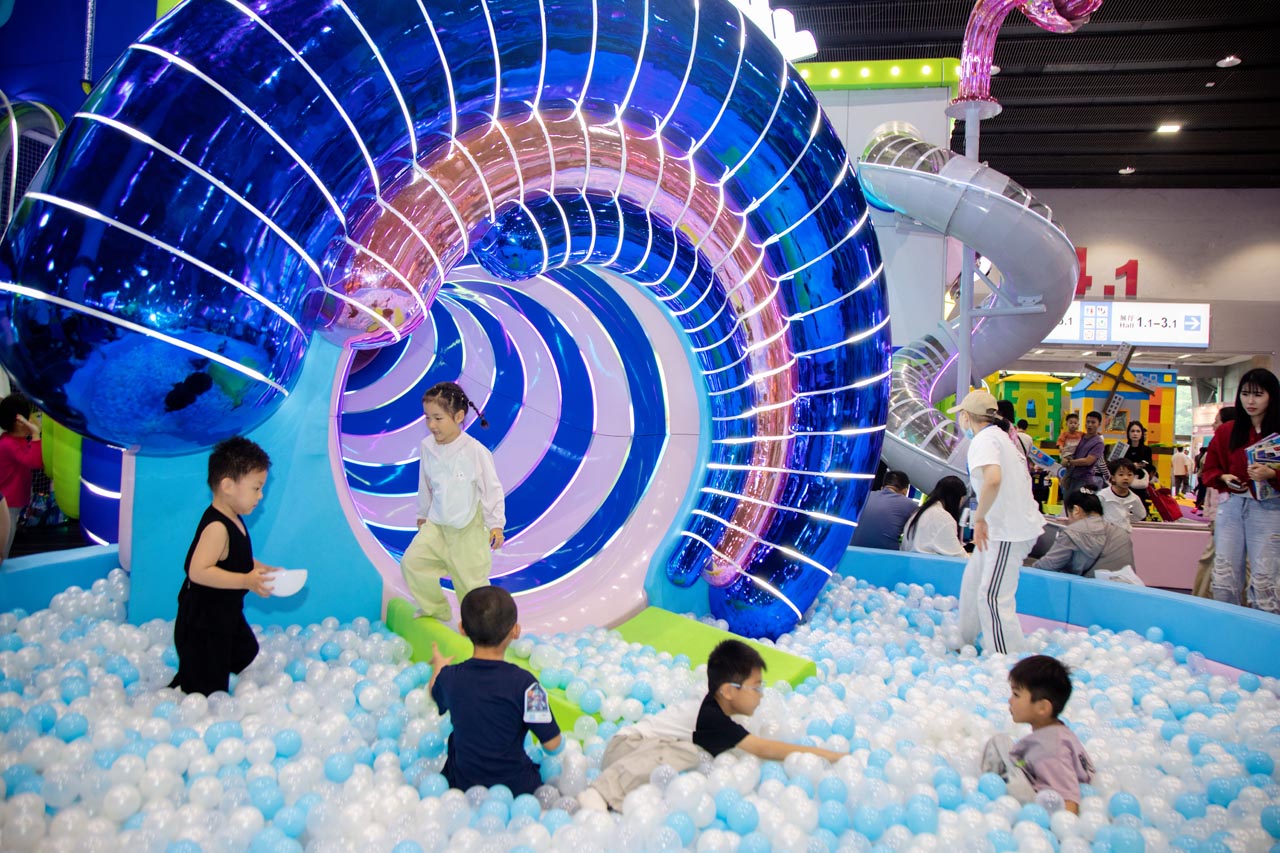
Industry data from IAAPA and independent operator benchmarking consistently shows a direct correlation between average guest dwell time and per-visit revenue. Guests who stay longer spend more: on food and beverage, on secondary attractions, on party packages and retail items.
The target dwell time for a well-functioning FEC depends on format: soft-play venues targeting children under six typically aim for 60–90 minutes; multi-attraction FECs targeting the full family demographic aim for 90–150 minutes; large-format destination venues may target 180 minutes or more. Each additional 30 minutes of dwell time, on average, represents meaningful incremental revenue per party.
Dwell time is not accidental. It is the result of deliberate design decisions: the sequencing of low-energy and high-energy activities to create rhythm; the placement of comfortable seating and adult-oriented zones that allow caregivers to remain engaged rather than waiting at the threshold; the strategic placement of food and beverage at points of natural rest; and the creation of progressive challenge structures that reward guests for staying longer.
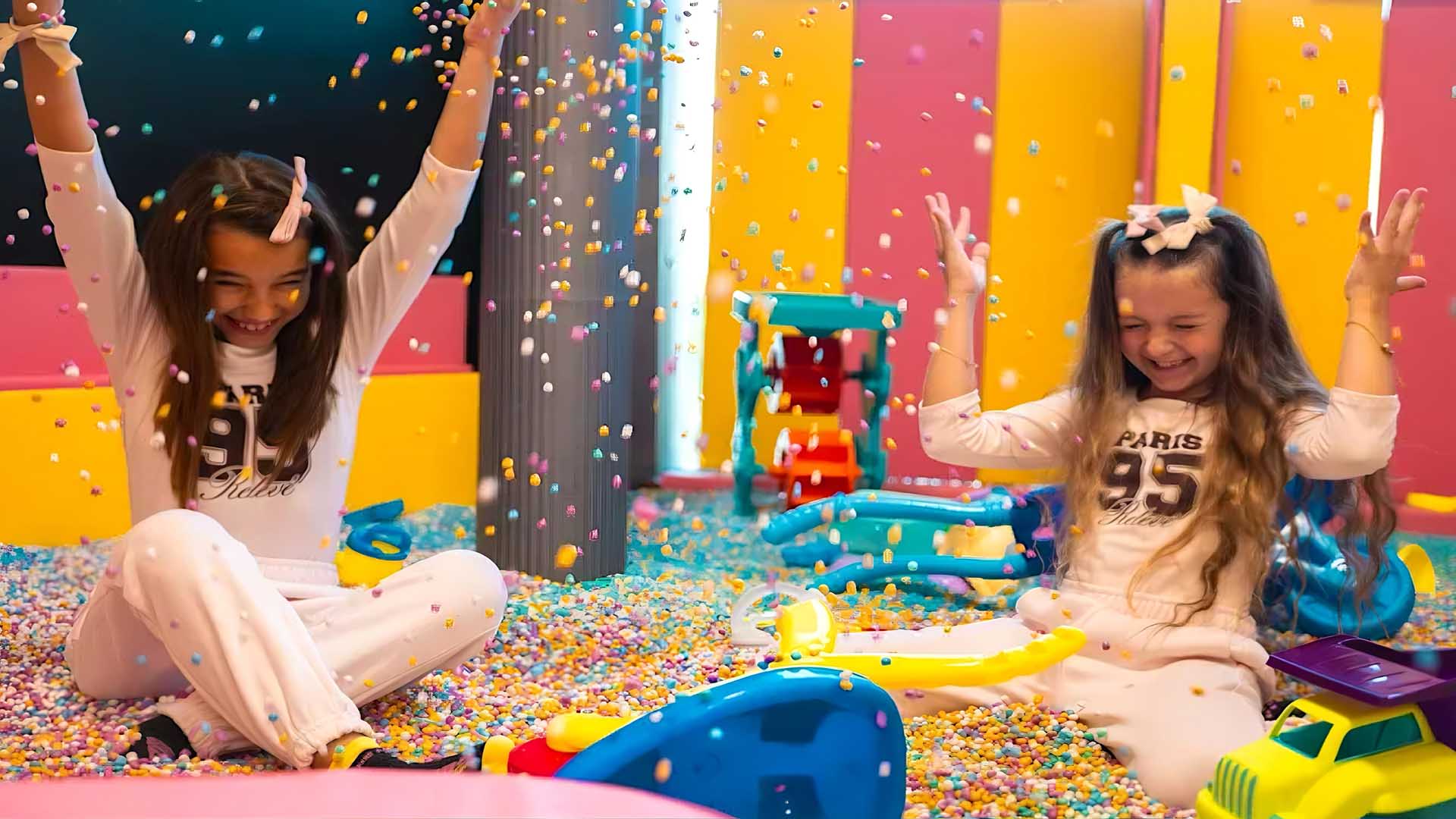
A first-year FEC that cannot generate repeat visits from its initial guest base will not survive. The economics of FEC operation require a significant proportion of revenue to come from returning guests: they cost nothing to acquire, they are familiar with the venue's safety protocols, they require less staff attention, and they are more likely to purchase higher-value packages.
The drivers of repeat visit behavior are well-documented. The Themed Entertainment Association's annual attraction attendance reports, combined with independent FEC operator data, consistently identify the following as the most significant factors:
Operators who invest exclusively in opening-period marketing and do not build a structured repeat-visit strategy—membership programs, event calendars, CRM communications—typically see attendance decline steeply in months four through eight as opening novelty dissipates.
The organizational model that most consistently reduces FEC failure risk is one that integrates concept development, space planning, equipment design and manufacturing, installation, and operational preparation into a single managed process. The fragmented alternative—where different parties are responsible for each phase, with the operator managing coordination—introduces execution gaps at every handoff that individually appear manageable but collectively create significant risk.
In a turnkey model, a single provider carries accountability for the coherence of the final venue: ensuring that the initial concept is faithfully realized in the physical space, that equipment fits the design intent, that installation completes on schedule, and that the operator receives not just a finished venue but the operational knowledge to run it effectively from day one. This model requires higher confidence in the selected partner, but it dramatically reduces the probability of the coordination failures that most commonly cause pre-opening delays and post-opening quality gaps.
One of the least visible but most important determinants of FEC performance is the degree to which the venue was designed with operational reality in mind. A design that looks compelling in 3D rendering but requires seventeen staff members to operate safely, creates guest flow patterns that generate queuing bottlenecks, or positions food and beverage outlets where guests cannot see them from the primary traffic paths, will underperform its potential regardless of concept quality.
Design-to-operation integration means that the design process includes explicit modeling of staff deployment, guest flow simulation, maintenance access requirements, and revenue-generating spatial logic. Venues designed with these considerations embedded consistently open with fewer operational surprises and achieve stabilized performance faster than those where design and operations are treated as sequential rather than parallel processes.
The most durable FEC concepts are built around play scenarios—coherent experiential narratives that give children (and, importantly, their parents) an understanding of what they are entering and a sense of purpose as they move through the space. A venue organized around a single, clear scenario—whether that is exploration of an undersea world, navigation of a futuristic city, adventure through an enchanted forest, or any other concept executed with genuine creative commitment—is more memorable, more distinctive, and more shareable than a venue that presents itself as a collection of unrelated activities.
Scenario-based design also provides a natural framework for ongoing programming: events, seasonal activations, and character appearances that extend and evolve the core narrative. This dramatically increases the repeat visit proposition—there is always a reason to return because the story continues.
The FEC industry's structural growth is real. The demand for quality, safe, engaging family leisure experiences is not declining. But growth in total market size does not guarantee success for individual projects. The failure rate in the first year for undercapitalized, poorly located, or design-deficient FEC projects remains meaningful, and the pattern of failure is, upon examination, highly predictable.
Successful FEC projects share a consistent set of characteristics. They are located in trade areas with genuine family demographic density and sufficient purchasing power. They are designed for experience architecture—not equipment procurement—with deliberate dwell time engineering and age-appropriate zone segmentation. They are operated by teams with documented safety protocols, service standards, and data management capabilities. They are financially modeled with full CAPEX visibility and adequate working capital runway. And they are differentiated by concept, programming, or operational quality in ways that give guests a reason to return and a story to share.
Failed FEC projects, conversely, exhibit predictable deficiencies: sites chosen for cost rather than catchment quality, designs driven by equipment availability rather than experiential logic, financial models built on aggregate footfall assumptions rather than qualified demographic conversion, and operational systems that cannot sustain the guest experience quality the concept requires.
The decision variables that determine which category a project falls into are mostly resolved before opening day. The location decision, the concept selection, the design brief, the supplier partnership, the financial structure, and the operational readiness plan are all made in the development phase. Investors, developers, and operators who treat these decisions with the analytical rigor they deserve—rather than as secondary considerations to the real estate negotiation or equipment procurement exercise—are the ones whose projects reach stabilized performance and generate the returns the industry is capable of delivering.
For those evaluating their first or next FEC investment, the most valuable question to ask is not 'how large a venue can we afford?' but 'what concept, in what location, operated at what standard, will give a family a reason to come back?'


