Low-cost indoor playground projects often look attractive at the beginning. Lower upfront investment, faster decision-making, and seemingly similar visual results make many first-time investors believe they are making a smart choice. However, industry data and real-world operating experience show a clear pattern: most cheap indoor playground projects struggle or fail within three years of opening.
The reasons are not accidental. They are structural, operational, and financial.
This article explains why cheap indoor playground projects fail, what hidden risks are often ignored, and how long-term investors can avoid costly mistakes.
Cheap indoor playground projects usually focus on one thing only: minimizing upfront equipment cost. Quotes are compared per square meter, often without a full understanding of what is included or excluded.
What looks inexpensive at the quotation stage often becomes expensive during operation.
Common characteristics of low-cost projects include:
Thin steel structures
Non-standard material specifications
Minimal safety engineering
Limited quality control
No long-term maintenance planning
The failure rarely happens in the first few months. Problems accumulate over time.
Indoor playgrounds are not decorative installations. They are high-frequency commercial structures used daily by dozens or hundreds of children.
Low-cost projects often suffer from:
Insufficient steel thickness
Poor welding consistency
Weak connection systems
Lack of load redundancy
Within 12–24 months, signs of fatigue appear:
Loose platforms
Squeaking or vibration
Deformation at high-traffic points
Increased maintenance closures
Once safety concerns arise, operators face:
Reduced capacity
Mandatory repairs
Insurance pressure
Loss of parent trust
No marketing campaign can recover a reputation damaged by safety concerns.
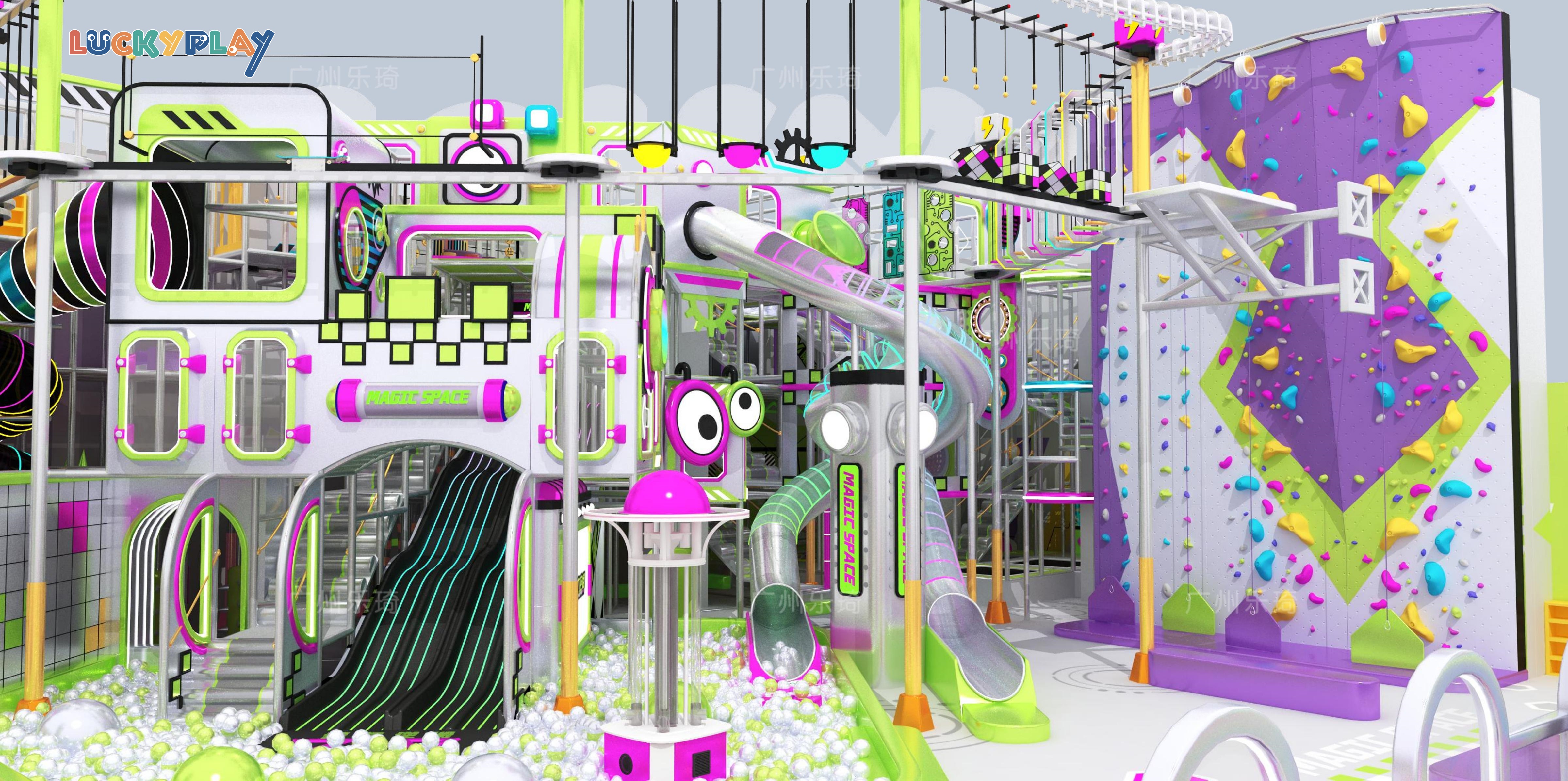
Materials determine lifecycle cost, not appearance.
Cheap indoor playgrounds typically use:
Low-density foam that collapses quickly
PVC covers with poor abrasion resistance
Plastics without UV stabilization
Low-grade coatings that fade or crack
Within 18–30 months:
Surfaces lose elasticity
Colors look old and dirty
High-touch areas require constant replacement
This leads to rising operating costs and an outdated appearance that discourages repeat visits.
One of the biggest hidden killers of cheap projects is maintenance frequency.
Low-cost equipment often requires:
Frequent repairs
Temporary closures
Emergency part replacements
Downtime means:
Lost ticket revenue
Customer dissatisfaction
Negative online reviews
Staff inefficiency
Over three years, the accumulated cost of maintenance, spare parts, and lost business often exceeds the original “savings.”
Many low-cost playgrounds are designed to look attractive, not to operate efficiently.
Common design flaws include:
Poor circulation causing congestion
Inadequate age zoning
Low throughput capacity
Limited upgrade flexibility
As customer volume grows, these design limitations cap revenue potential.
Cheap projects often cannot scale, expand, or adapt to new concepts without major reinvestment.
Some low-cost projects rely on incomplete or outdated certifications.
Problems arise when:
Local authorities conduct inspections
Shopping malls upgrade safety requirements
Insurance policies require compliance documentation
Without proper EN1176 or ASTM F1487 structural safety compliance and verified material testing, operators may face:
Forced retrofits
Insurance exclusions
Contract termination by landlords
This risk increases significantly in commercial shopping mall environments.
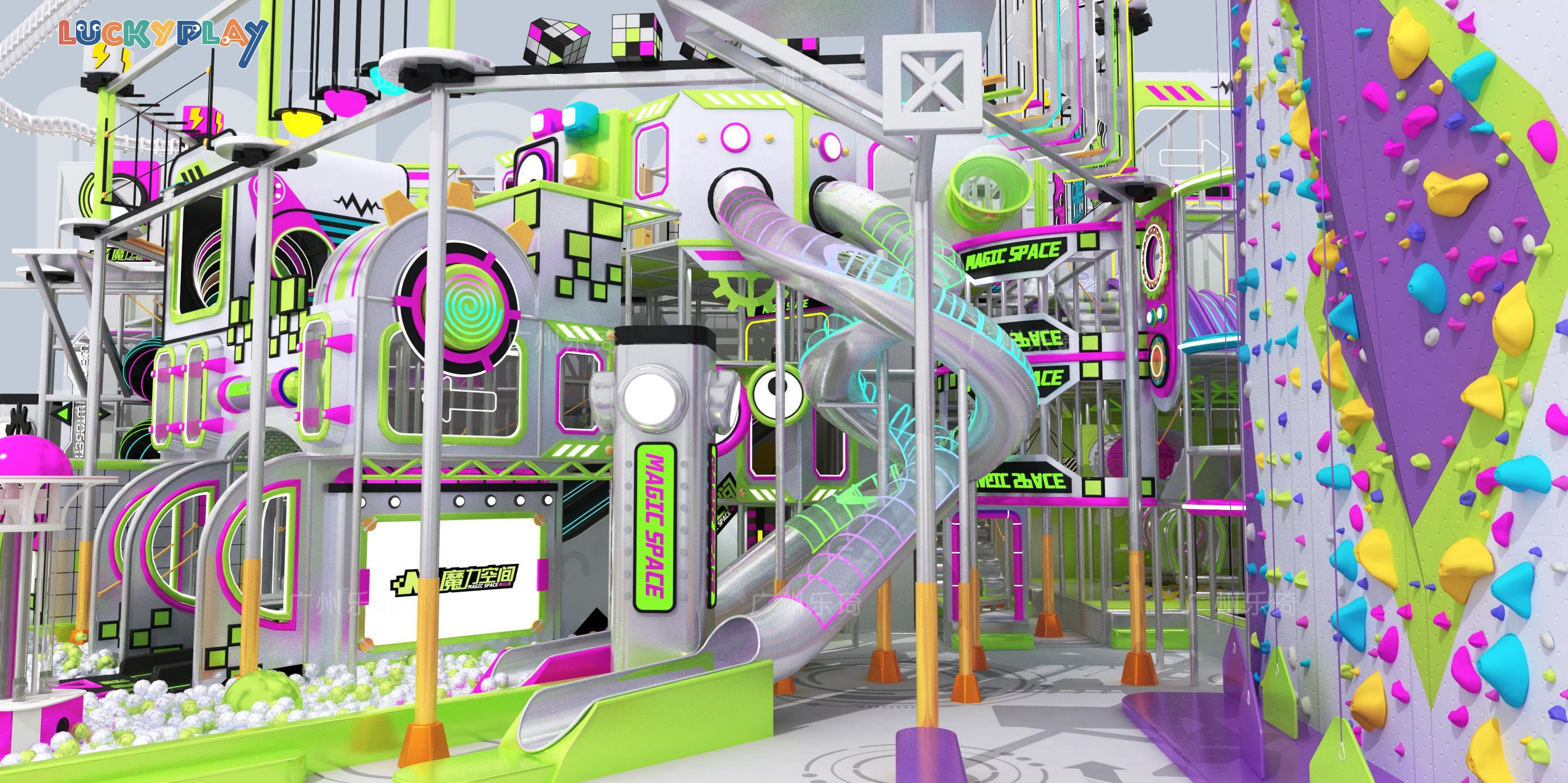
A well-engineered commercial indoor playground is designed for 5–10 years of operation with controlled maintenance.
Cheap projects often reach a critical point within three years:
Appearance deteriorates
Maintenance costs rise
Safety risk increases
Customer interest declines
At this stage, operators are forced to:
Reinvest heavily
Replace major components
Or shut down entirely
The total cost over time becomes significantly higher than a properly engineered solution.
Comparing playgrounds only by price per square meter ignores:
Structural lifespan
Maintenance frequency
Downtime losses
Brand reputation damage
Future upgrade limitations
True cost must be evaluated across the full operational lifecycle, not at delivery.
Indoor playgrounds that operate successfully beyond three years share common characteristics:
Commercial-grade structural engineering
Compliance with EN1176 and ASTM F1487
Verified material specifications
Modular systems designed for maintenance and upgrades
Balanced design between play value and throughput
Clear lifecycle cost planning
These projects may cost more upfront, but they deliver lower total cost of ownership and higher long-term profitability.
Cheap indoor playground projects rarely fail because of one single mistake. They fail because short-term savings override long-term thinking.
For shopping malls, property owners, and professional investors, an indoor playground should be treated as a commercial infrastructure asset, not a temporary attraction.
The question is not how little can be spent today, but how much value the project can deliver over its full lifecycle.


