What modules do you need for a good indoor playground

WELCOME TO OUR BLOG

We're sharing knowledgein the areas which fascinate us the most
click

What modules do you need for a good indoor playground

By Zhang November 23rd, 2024 1282 views
What modules do you need for a good indoor playground

What modules do you need for a good indoor playground

A good indoor play center should include several key sections to ensure it attracts and satisfies visitors of different ages and interests. Here are some important components:

Children’s Play Area: Designed specifically for younger children, this area typically includes soft play equipment, safe slides, building block areas, and climbing zones. Safety and cleanliness should be prioritized to ensure the health and safety of toddlers.

Interactive Gaming Zone: Incorporating virtual reality (VR) or augmented reality (AR) technology can attract older children and teenagers. This section can offer immersive entertainment experiences through multimedia devices.

Sports Area: Includes physical activity options suitable for all ages, such as trampolines, indoor bowling, climbing walls, or indoor basketball courts. These facilities help improve children’s motor skills and coordination.

Activity Rooms and Craft Areas: Offer workshops in crafts, science experiments, or creative classes to inspire children’s creativity and practical skills.
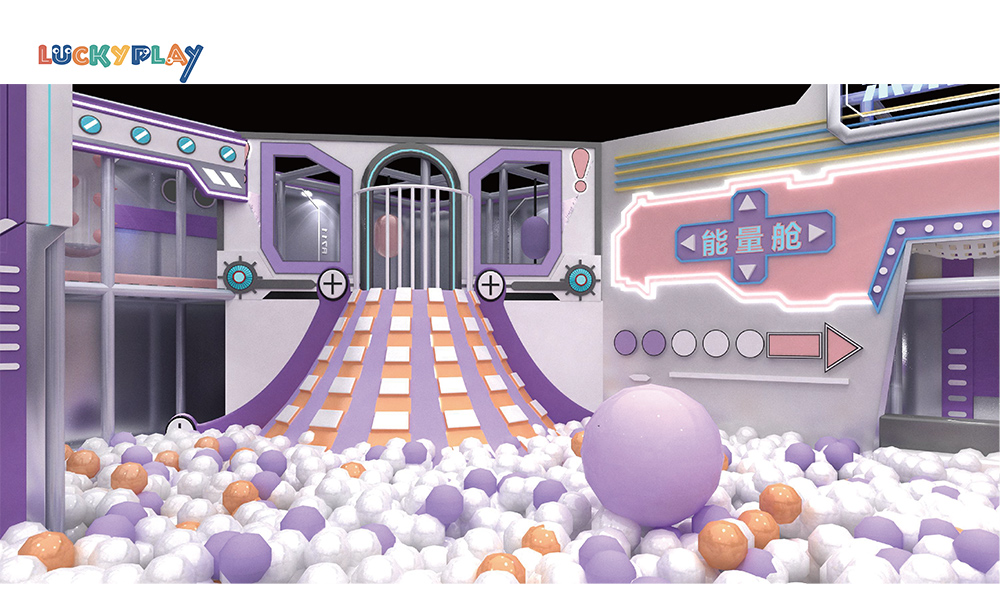
Themed Experience Zone: Designed around specific themes (such as space, underwater world, fairy tales), providing unique scenes and interactive opportunities to enhance the fun of the play center.

Parent Relaxation Area: Comfortable areas for parents to use, including seating, coffee bars, free Wi-Fi, etc., allowing parents to have a place to relax while their children play.

Food and Beverage Zone: Provides healthy and delicious foods and drinks to meet the needs of the whole family. Consider offering a children’s menu and allergen labels.

Sanitary Facilities and Safety Measures: Ensure clean restrooms and maternal and child facilities, along with good security monitoring and emergency handling measures to ensure the safety of all play areas.

By integrating these sections, an indoor play center can become a suitable family entertainment destination for all ages while providing a safe and enjoyable play environment.
How to open an indoor playground?
Previous
How to open an indoor playground?
Read More
Is it profitable to open an indoor playground?
Next
Is it profitable to open an indoor playground?
Read More
Common procurement questions from FEC operators evaluating indoor activity systems.

What is an indoor activity system in an FEC context?

An indoor activity system is the equipment layer of a family entertainment center — structured play equipment, soft-contained play zones, and connecting circulation design — as distinct from the business or site-planning decisions involved in opening a facility.

What certifications should indoor playground equipment carry?

Equipment should carry documentation against the applicable regional safety standard (ASTM F1918 for soft-contained play equipment or ASTM F1487 for public playground equipment in the U.S.; EN 1176 and EN 1177 in markets referencing European norms), backed by test reports from an ISO/IEC 17025-accredited laboratory.

What affects lead time for commercial indoor playground equipment?

Lead time varies by customization depth, material sourcing requirements, and the manufacturer's existing order backlog at time of purchase, rather than following a fixed industry-wide timeline.

How is ROI typically measured for indoor activity systems?

Operators commonly model ROI as revenue per square foot of activity floor area, calculated from expected daily visitor throughput and average spend, run against the facility's own market data rather than industry-wide averages.

Does MOQ affect single-location operators differently than multi-site operators?

Yes — single-location operators negotiating below standard MOQ may face per-unit cost premiums, while multi-site operators typically gain negotiating leverage by committing to aggregate volume across locations rather than per-shipment volume.